

When visiting a large city, I always think it’s a good idea to take a day trip outside of the city to see surrounding cities and towns. When visiting Madrid, Toledo is top on people’s list of day trips.
History of Toledo
Toledo is a very historic city, it’s a UNESCO World Heritage Site and the first mentions of Toledo date back to ancient roman times when a battle was fought nearby the city, then called its Latin name of Toletum in 193 BC.
The city is often known as the “City of Three Cultures” as Christians, Muslims and the Jewish people all co-existed in Toledo and actually got along. The city converted to Christianity in the year 589 AD. In 712 AD, the Muslims took over the city and would be the dominant religion for 373 years until 1085 when the Christians took control of the city again. At that time the Jewish and Muslim people in the city decided to stay in the city and co-exist in a peaceful manner with the Christians. Sadly, this harmonious co-existence only lasted for 400 years as the Jewish were expelled from Toledo in 1492.
The great thing about this Full Day Tour to Toledo that I took from Madrid, is that it explores all three of these cultures and their history in Toledo. The tour is also in both Spanish and English, making it a great tour for visitors from many countries in the world.

Arriving in Toledo
Aside from the history, one of the reasons that a visit to Toledo is a must is the beautiful views of the city.
The drive to Toledo takes just under an hour from Madrid and our first stop as we approached the city was to one of the many viewpoints overlooking the city, Mirador del Valle. Known as the best viewpoint of Toledo, the view is absolutely stunning from here, definitely Instagram worthy.

While the viewpoint was rather high up, you could still see just how much the city of Toledo was built on a hill above the Tagus River and valley below. Not to fear though, there are escalators that you can take up to the city from the valley below. These were a welcome site for my still not fully healed post covid lungs when I was visiting.
After arriving up to the old city of Toledo via the escalator, we walked along the old walls of the city. One of the aspects of the old cities in Spain that I loved was that not only were they walled cities, but that many of the walls remain in the present day. Along with the walls, there are also many gates that lead in and out of the city. Pictured below Gate of Puerta del Sol which we walked thru as we left the city at the end of the day.

Exploring the Three Cultures of Toledo
As I mentioned earlier, one of the reasons Toledo is so special is that for centuries, the Christian, Jewish and Muslim people all lived together in harmony in the city. You can expect to spend a good portion of your day visiting the religious buildings of these three cultures.
- San Juan de los Reyes Monastery – Our first stop was the San Juan de los Reyes Monastery which was built between 1477-1504 as a burial place for the Monarchs of Spain. The monastery is beautiful; things that are worthy of seeing are the garden at the bottom of the two-floor cloister and the altar in the main chapel which features scenes from the Passion and the Resurrection. The thing I found most interesting were the ancient paintings on the wall that have been unearthed during renovations to the monastery.


- Synagogue of Santa Maria la Blanca – While the exact date the Synagogue of Santa Maria La Blanca was built is unknown, based on documentation, it is believed to have been built in the late 12th century. As I mentioned earlier, the Jewish were expelled from Toledo in 1492, but even decades before this, the synagogue was taken over by the Christians and became the Church of Santa Maria la Blanca. Considered the oldest synagogue building in Europe, it now serves as a symbol of the Jewish history in the city of Toledo. The white columns inside make for quite the architectural site to see.

- Church of Santo Tome – The Church of Santo Tome was originally built in the 12th century at the site of an old mosque and then rebuilt in the 14th century after years of disrepair. Santo Tome is one of the most visited spots in all of Spain thanks to a very famous painting being located within the church. Greek Painter El Greco, who lived in Toledo from 1577 until his death in 1614, painted the “Burial of the Count of Orgaz. The painting is said to depict the burial of mayor of Toledo who was buried in Santo Tome in 1323.

- Toledo Cathedral – My favorite part of the tour to Toledo was seeing the Cathedral. If you’ve visited thru a lot of the cities of Europe, chances are you have seen many cathedrals. I’ll admit considering that Toledo is one of the smaller cities I’ve visited, I wasn’t expecting the Cathedral to be as impressive as it ended up being. Construction on the cathedral began in the thirteenth century and it was not until over 200 centuries later that the final of the eight chapels were completed.

The architecture and artwork in the cathedral is beautiful enough that you could spend hours inside seeing it all. Below are some of the must-see sites in the Toledo Cathedral:
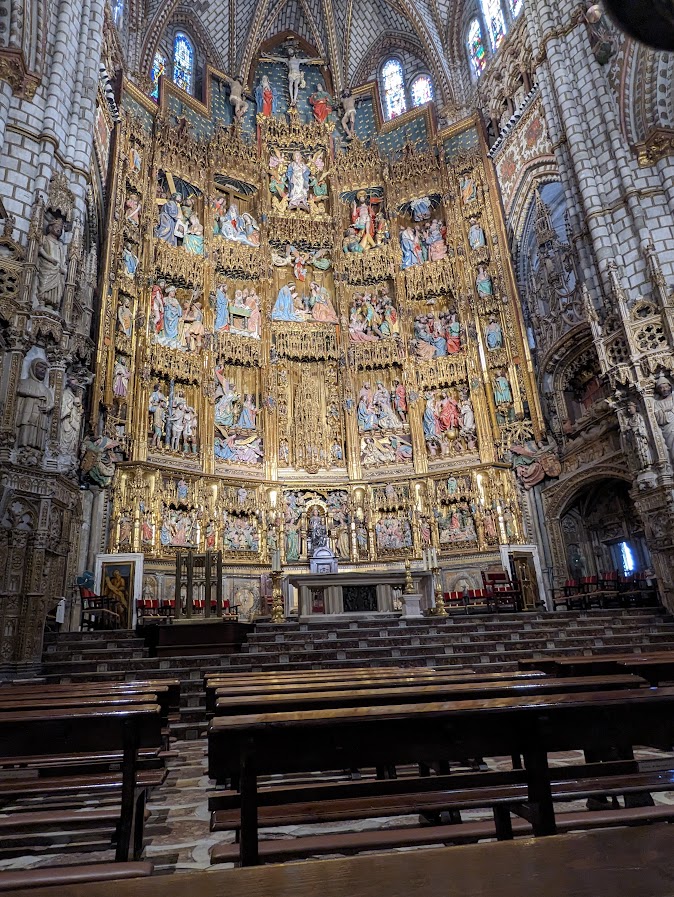
Main Chapel – There are eight chapels located inside the cathedral. As I’m sure you can imagine; the main chapel is more than worth spending some time exploring. The altar is just stunning and features filigree details. Taking a walk around the main chapel, it’s evident that not only is the cathedral a place of worship, but it could very well be considered an art museum. Paintings and sculptures fill the main church on the floors and walls and even above in the ceilings.


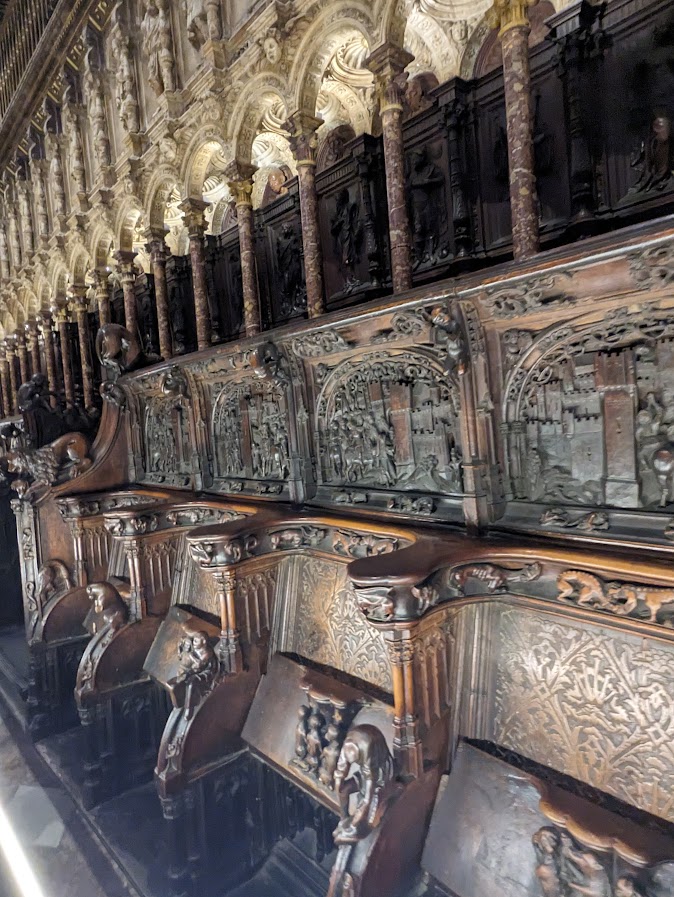
Choir – The choir was something that I was very interested in seeing. Located across from the altar in the Main Chapel is the choir. The 2-level rectangular room features 2 organs and seats around the edges of the room for the people in the choir. As soon as you walk in, you feel like you have stepped back in time centuries.
Monstrance of Enrique De Arfe – One of the most visited items in the cathedral is this beautiful Monstrance. Created by German metalworker Enrique De Arfe in the early 1500s, this Monstrance is said to have been made of the first gold to arrive in Spain. Standing at over 10 feet tall, it is displayed behind bullet proof glass and a state-of-the-art security system. The Monstrance does get taken out of the cathedral each year to be carried in the procession to celebrate the feast of Corpus Christi, the most important and largest festival in the city of Toledo.

Sacristry – Like other parts of the cathedral, the sacristry is a great spot to see some beautiful pieces of art. Not only are there paintings and sculptures throughout the room, the ceiling fresco is absolutely beautiful.
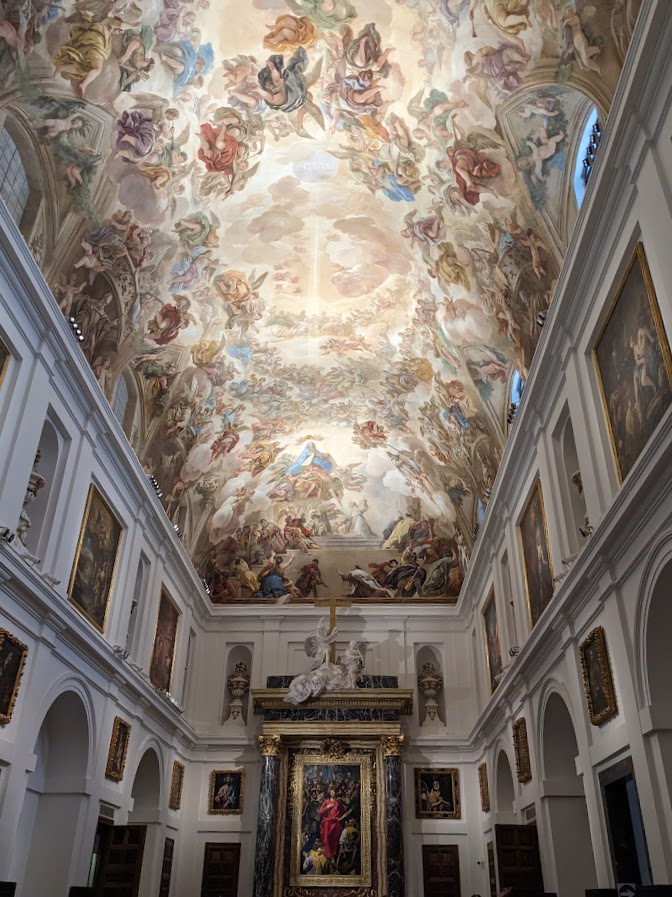
You could easily spend hours exploring the cathedral and all the hidden corners, on the day tour that I took, we spent a good amount of time being guided to the highlighted spots I mentioned and some of the other chapels.
- Alcazar of Toledo – Dating back to the 3rd century, this fortress is located on top of a hill overlooking the city of Toledo. It played a big part in the Spanish Civil War and is a symbol of Spanish nationalism. Now it houses a military museum and is a great place to visit if you are interested in Spanish history. The museum was closed on the day I visited, but the Alcazar was the location of our lunch that was included in the tour. Lunch consisted of an included drink, either soda, water, wine or beer and some tapas. It was very delicious and a great way to get to know some of the others on the tour. One of the reasons I love taking day tours when I travel is being able to meet people from all over the world. This day I dined with a fellow American from California, a lady from Mexico and a gentleman from Argentina. It was so much fun to chat about their travels and their home countries.

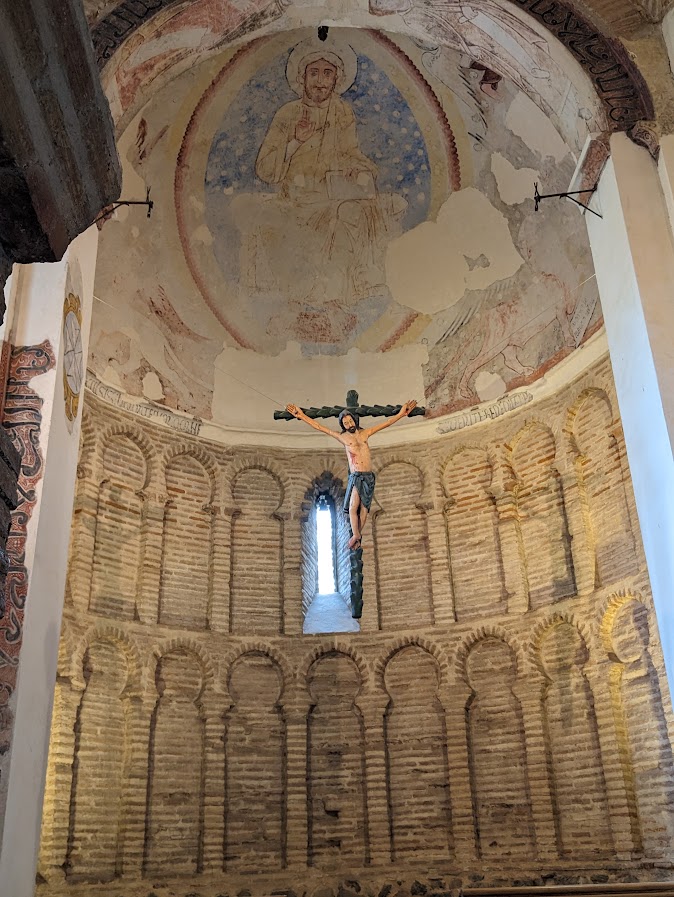
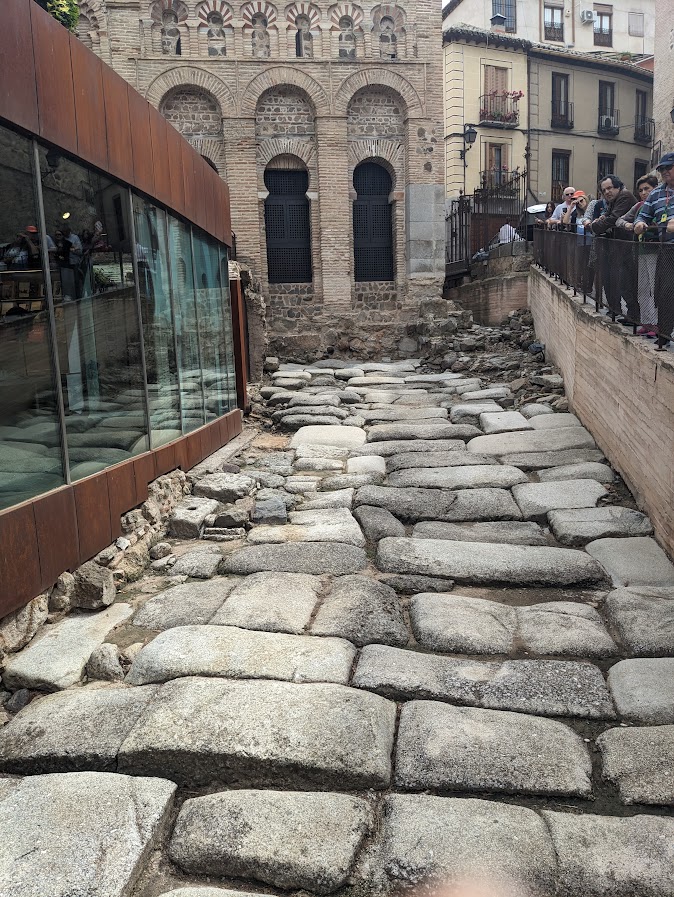
- Mosque of Cristo de la Luz – Our final stop after lunch was the Mosque of Cristo de la Luz. Built in the year 999, not only is it the oldest standing monument in Toledo, but it is also surprisingly the same as when it was built all those centuries ago. The mosque was built and used by the Muslim community but was later taken over by the Christians and it remains a Catholic Mosque today. It’s a beautiful building and you can see both the Muslim and Catholic influences inside the mosque. There are also many aspects in and around the building showing just how old it is. Including an old Roman walkway just outside the mosque that was unearthed hundreds of years later.

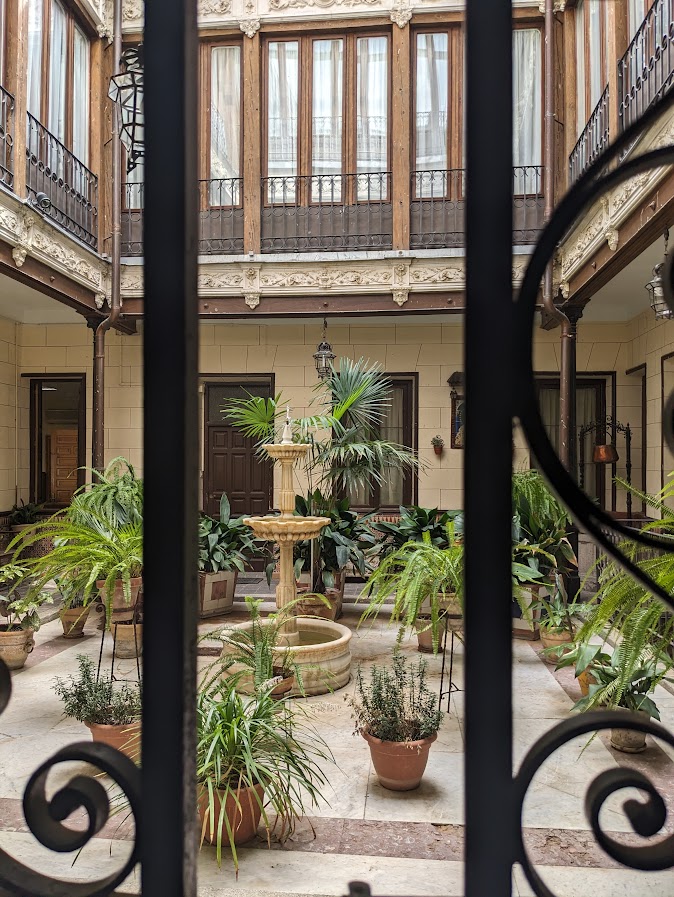
The history of the three cultures of Toledo is what makes it such a unique place to visit, but along with seeing the religious buildings, I also recommend taking a walk around the city streets and squares if you enjoy visiting older cities. While walking thru the streets, I enjoyed seeing the many details in the buildings and streets. Many of the homes and buildings had gated courtyards which were very beautiful.

If you are planning a trip to Spain and are spending some time in Madrid, I highly recommend a day trip to Toledo. It’s a great way to see some of the older history of Spain while learning about the three cultures that co-existed in this beautiful city.
This article is now featured on GPSmyCity. To download this article for offline reading or create a self-guided walking tour to visit the attractions highlighted in this article, go to Walking Tours and Articles in Toledo.
Pin for later:
 Beyond The Miles Travel Blog
Looks awesome, thanks for sharing!
LikeLiked by 1 person
Wow really took me back to my memories of a day trip to toledo from Madrid. I loved this historic city. I explored way less than you, as I spent bulk of the time on the ancient bridges marveling at the views.
LikeLiked by 1 person
I definitely could have stared at the views for hours!
LikeLike
The chapels and cathedrals look absolutely beautiful! Stunning photos! Added to my bucketlist!
LikeLiked by 2 people
This place is a tourist paradise. The images are just breathtaking. Hard to not put it on your bucket list. Thanks for sharing this beautiful post.
LikeLiked by 1 person
Wow!! On my bucket list to visit!
LikeLiked by 1 person
Holy Toledo! Haha I had to get that in. Great post and very informative. Toledo looks like a beautiful city with wonderful architecture. Thanks for sharing!
LikeLiked by 1 person
Sounds like an amazing place!
LikeLike
Weren’t you so grateful for the escalators? That would have been quite the climb otherwise!
LikeLiked by 1 person